Simplified billing thanks to new billing module

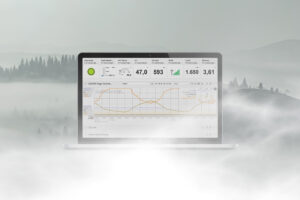
The IoT platform offers a new feature: the new billing module is used to simplify the billing of current service rates to end customers. Minimum requirement? Only a current subscription!

Table of Contents

Thanks to the new billing module, services that are mapped as service rates can be flexibly adapted to the respective requirements. The global account is based on a prepaid model with vouchers and is therefore easy to calculate. In order to enable an attractive rate structure for the customer, they are also billed with vouchers;

The advantages for the partner

  • Regular monthly income
  • Easy billing of the partner’s own services (e.g. support, additional services, …) to its respective end customers
  • Flexible customer rates for every device
  • Hardware as a Service models are very easy to implement

In the global account, all services and rates converge into one balance. The data and service rates of the customer accounts are also listed.

Special features

  • Rate templates with service description
  • Global account with current detailed bookings and balance
  • Customer account statistics for a quick overview
  • Balance payout request on the global account

For your own accounting, monthly account reports with invoice details are conveniently available in PDF format. Information such as rate underfunding or alerts about low account balances help to ensure a smooth and secure business process.

Get to know the IoT platform in a free onboarding

Plattformfeature OPC-UA - SCADA-System
Applications

Interface to your process control or SCADA system

The open interfaces of the Microtronics IoT Platform via RESTful API and OPC-UA enable easy integration of the data into the desired target systems such as process control or SCADA systems. Some suppliers have already integrated the data loggers directly.

2G/3G Sunset
Applications

GSM (2G) & UMTS (3G) switch-off – significance for IoT devices

Ever-increasing demands on data transmission and the desire for future-proof technologies are presenting network operators with new challenges. To make way for future-proof transmission technologies such as 4G, NB-IoT, LTE-M and 5G, older technologies are being phased out gradually. In many countries, the phasing out of 2G and 3G networks is already underway or at an advanced stage. In Austria, too, the 3G network has already been completely phased out, whilst the phasing out of the 2G network is planned for 2028.

The phasing out of older mobile communications standards is freeing up spectrum for modern technologies. It is therefore important to invest in future-proof transmission technologies today. We have summarised the differences between the various mobile communications technologies – and why not all 4G is the same – in our article ‘Not all 4G is the same’.

In order to use our live chat, you must agree to the loading of Hubspot cookies. You can find out more about this in our privacy policy.