
Around 126 billion cubic metres of treated water is lost in distribution networks worldwide every year before it reaches customers. This is enough to meet the water consumption needs of hundreds of millions of people. On average, around 30% of the water produced globally is classified as non-revenue water (NRW).
Not only does non-revenue water (NRW) cause environmental problems, it also incurs enormous costs. Globally, these costs are estimated to be at least 39 billion US dollars per year.

What is meant by 'non-revenue water'?
Non-revenue water is all the water that is produced and treated, but not billed for or used. There are two main components of non-revenue water:
Physical losses: leaks, burst pipes and overflows in the water network
Commercial losses: measurement errors, unauthorised use or theft of water
Causes of non-revenue water
The causes of non-revenue water are numerous and frequently interconnected. One key factor is ageing or poorly maintained infrastructure, which can result in burst pipes, leaks and overflows.
Additionally, many water suppliers have inaccurate or missing water meters, meaning actual consumption is not recorded correctly.
Another issue is the use of water without paying for it, either through illegal connections or unauthorised use.
In addition, inefficient pressure management within the distribution network can also play a role, as excessive or fluctuating pressure can lead to increased leaks and water loss.
Consequences of non-revenue water
The consequences of non-revenue water are wide-reaching, impacting both the environment and the economy.
These losses waste valuable water and the energy required for its treatment and distribution. This results in higher CO₂ emissions.
At the same time, water suppliers incur financial losses, as every cubic metre of water lost represents lost revenue. To compensate for this, they often have to tap additional water resources, which puts further strain on existing sources.
Overall, it is evident that the issue of nitrogen deposition (NRW) has both ecological and economic consequences.
Strategies for reducing non-revenue water
An effective approach to managing NRW requires a multidimensional strategy.
- Leak detection & repair: Regular inspection and rapid repair of pipe damage
- Improved measurement & billing: Precise and regularly calibrated water meters.
- Pressure management: Optimisation of network pressure to minimise leaks.
- Real-time monitoring & data analysis: Smart sensors for monitoring flow and network performance.
- Guidelines & enforcement: Control of illegal connections and clear regulatory measures.
How does technology help?
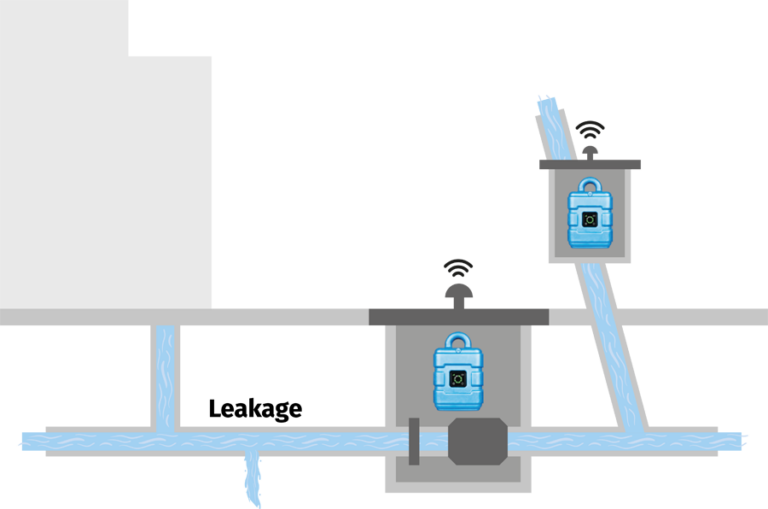
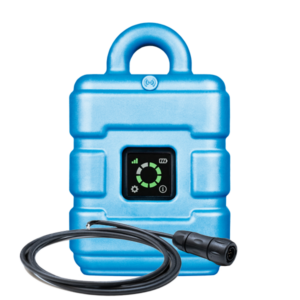
Microtronics helps water suppliers by relying on intelligent sensor networks, data loggers and a central platform.
This enables leaks to be detected early, reducing water losses and cutting energy and costs.
Conclusion
Non-revenue water is an enormous global problem that causes significant costs and environmental pollution.
However, water suppliers can significantly reduce these losses through the targeted use of a combination of technology, data analysis and strategic management – benefiting the environment, their budget and the population.